What is a PAU?
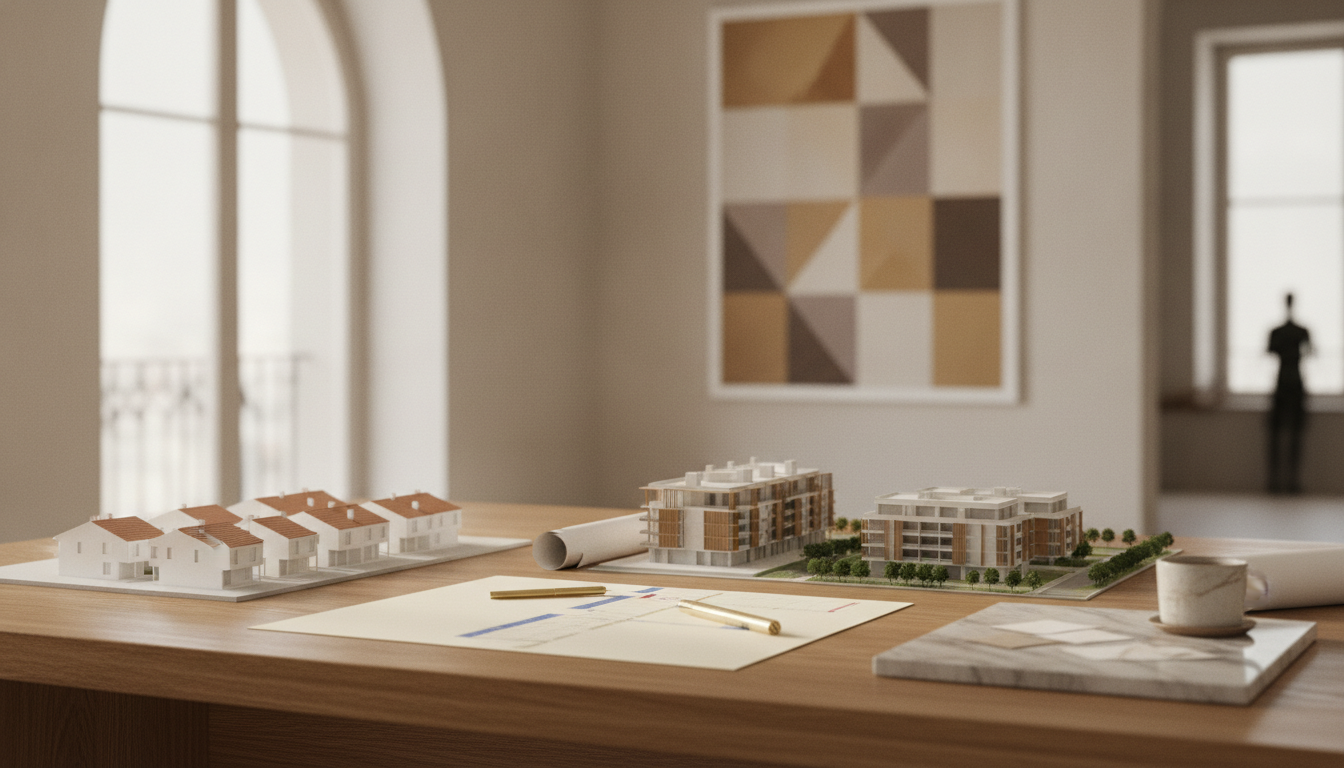
What is a PAU?
A PAU (Urban Action Programme) is an urban planning tool that allows large areas of unallocated or unzoned land to be transformed into building plots. It includes the design of streets, infrastructure, green spaces and basic amenities for the subsequent construction of residential housing and commercial developments.
Concept and legal framework of an Urban Action Programme
The Urban Action Programme is a mechanism established in Spanish spatial planning and urban development legislation. Its fundamental aim is to structure city growth in an orderly manner, avoiding disjointed urban expansion. Unlike isolated developments on consolidated urban land, a PAU addresses large-scale sectors that require comprehensive planning from scratch.
Through this procedure, local authorities and developers agree on the boundaries of a territorial area. Within this area, residential blocks and all the infrastructure required to guarantee livability are planned: sewerage networks, water and electricity supplies, street lighting, street layouts, plots set aside for schools or health centres, and public parks.
Stages of urban development in a PAU
The complete process of a development of this scale covers several stages that typically span several years. Understanding these phases is essential for anyone considering buying a property in these sectors.
1. Planning and administrative approval
In the first stage, the municipality approves the detailed plan (plan parcial) that defines the sector and sets out land uses. Maximum buildability, housing density per hectare and the percentage of land reserved for public facilities are determined. Likewise, the land pooling association (junta de compensación) is constituted, made up of landowners who share the costs and benefits of the development.
2. Land management and re-allocation
Once the project is approved, land re-allocation (reparcelación) is executed. This legal procedure aggregates the original land properties and redistributes them proportionally into new building plots and mandatory free transfers to the local council for roads, green spaces and community facilities.
3. Infrastructure and development works
Physical ground preparation works are carried out. Water, electricity, gas and telecommunication utilities are installed, avenues are paved, pavements and roundabouts are built, and parks are landscaped. Building permits cannot be obtained until the infrastructure works reach the stage of completion required by regulations.
4. Housing construction and local services
With the basic infrastructure ready, property developers begin constructing residential and commercial buildings. Subsequently, once the municipal council formally accepts the infrastructure, first occupation licences are granted, allowing keys to be handed over to buyers.
Characteristics and types of housing in a PAU
Homes in areas developed through this system typically follow modern architectural and urban planning patterns. As globally planned sectors, they exhibit distinct characteristics compared to historic city centres or traditional neighbourhoods.
Residential developments and community facilities
Developments in these areas are often structured as gated communities with communal areas. It is common to find complexes with swimming pools, sports courts, children's play areas, gyms and underground parking spaces. Property types range from apartments with varying numbers of bedrooms to detached houses or penthouses with large terraces.
Subsidised Housing (Vivienda Protegida) in the Comunidad de Madrid
In the Comunidad de Madrid, urban developments organised through a PAU are required by law to reserve a percentage of their residential build capacity for Publicly Subsidised Housing (VPP). These schemes, notably Limited Price Subsidised Housing (VPPL) and Basic Subsidised Housing (VPPB), facilitate home ownership for families and young people subject to maximum income limits and prices regulated by the regional government.
Legal comparison between VPPB and VPPL in the Comunidad de Madrid
Key regulatory differences between the types of publicly subsidised housing regulated in the Comunidad de Madrid.
| Criteria | VPPB (Basic Protection) | VPPL (Limited Price) |
|---|---|---|
| Maximum usable area | 150 m2 | 150 m2 |
| Buyer income limit | Up to 5.5 times IPREM | Up to 7.5 times IPREM |
| Primary purpose | Habitual and permanent residence | Habitual and permanent residence |
Criteria
Maximum usable area
VPPB (Basic Protection)
150 m2
VPPL (Limited Price)
150 m2
Criteria
Buyer income limit
VPPB (Basic Protection)
Up to 5.5 times IPREM
VPPL (Limited Price)
Up to 7.5 times IPREM
Criteria
Primary purpose
VPPB (Basic Protection)
Habitual and permanent residence
VPPL (Limited Price)
Habitual and permanent residence
Regulated by regional subsidised housing legislation in the Comunidad de Madrid.
Advantages and disadvantages of buying property in a PAU
Investing in a home within a new development sector offers clear benefits, although it requires considering certain timing factors.
Main advantages
- Quality and energy efficiency: Properties are new-builds that comply with current standards for thermal and acoustic insulation and energy efficiency.
- Spacious urban layout: They feature multi-lane avenues, cycle lanes, ample parking facilities and abundant parkland.
- Comprehensive communal facilities: They provide additional amenities within the residential development itself.
Points to consider
- Gradual roll-out of services: During the early years, public transport, local shops and educational facilities are still being established.
- Delivery timelines: When purchasing off-plan, construction timescales and administrative licences may require waiting periods.
Financing and mortgages for homes in new development sectors
Purchasing a property in a PAU requires sound financial planning, especially when buying off-plan or during construction. It is common to arrange financing for both initial down payments and the subsequent completion of the title deed.
To evaluate the transaction's feasibility and analyse options across the banking market, seeking support from mortgage brokers is advisable. These professionals assist with comparing mortgage loans, managing valuations and negotiating terms tailored to the buyer's needs or handling developer mortgage subrogation scenarios.
Examples of PAUs in the Comunidad de Madrid
Within the Comunidad de Madrid, there are numerous examples of this urban development model. Well-established neighbourhoods such as Las Tablas, Montecarmelo, Sanchinarro and Ensanche de Vallecas transformed the capital's suburbs in recent decades. Currently, expanding new sectors such as El Cañaveral, Los Berrocales and Los Ahijones continue this trend, supplying new residential housing to the region.
Frequently Asked Questions
What minimum percentage of residential land must be reserved for subsidised housing in urban developments?
What is the legal role of the Land Pooling Association (Junta de Compensación) in an urban development?
Fuente: BOE, Ley 9/2001, de 17 de julio, del Suelo de la Comunidad de Madrid, art. 102